Campervanning in Norway on a budget
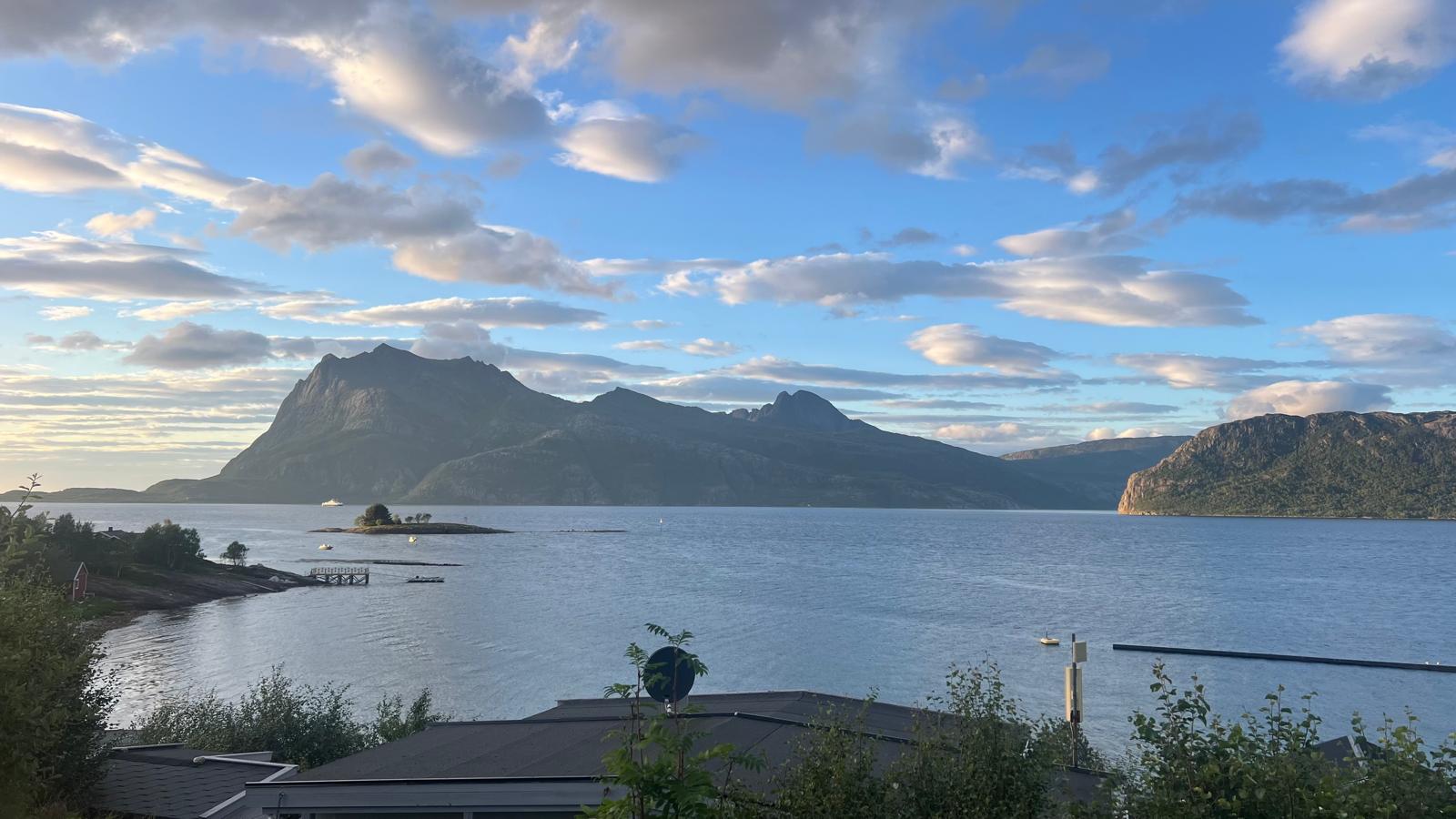
Travel across Norway in a campervan and you will have the opportunity to experience breathtaking scenery. The beauty of the fjords and the scale of the steep sided mountains is something that can’t be captured on photographs. And there is so much stunning scenery, from the steep jaggy mountains in the north, all down the west of the country where you’ll find fjords and glacier-topped mountains. What’s more, to access these areas of outstanding natural beauty, you’ll be driving on dramatic coastal roads, crossing fjord’s on ferries and climbing mountain passes. You’ll be able to appreciate fantastic feats of engineering, crossing high bridges and travelling through long tunnels.
However, compared to a trip to other areas of Europe, campervanning in Norway is potentially very much more expensive and distances to get there and driving times across the country are greater. Like other areas of Europe there are ‘honey pot’ areas, where frequently shared Instagram pictures have attracted thousands of visitors and in areas where there are narrower roads and less camping places this can prove problematic. Depending on the season you travel, there maybe snow to contend with and even in the summer you should be prepared for lots of rain and cooler temperatures than the UK.
So here’s some thoughts and tips on how to make a trip to Norway possible, enjoyable and affordable:
Food
Prices of groceries in Norway are very expensive; that is, for us coming from another European country. It is important to appreciate that for Norwegians the cost of living is not higher than in the UK as wages are much higher, yet it can feel frustrating (if you are not expecting such high prices) when even supermarket shopping for basic goods is not going to allow you to keep to a tight travel budget. So try to fill any spaces in your van with non-perishable food. Islands such as the Lofoten Islands are even more expensive, so shop on the mainland beforehand.
Reviewing our spending, we could have saved money by limiting a little more, the buying of the odd snack/icecream here and there in cafes or campsite shops, as this really added up. Also if you do buy a pizza or burger in café, be prepared to feel disappointed as you’ll be paying so much more than at home (for us Scotland), but the quality will be no better (and possibly poorer).
While it might seem here we are talking about how expense creates a scarcity of opportunity to eat good delicious food, it is worth noting that Norway is very much a land of abundance, there's lots of opportunity for fishing (sea and fjord without license but check local regulations) and foraging (mushrooms and berries) if you have that knowledge.
Alcohol
Beer is incredibly expensive (we are talking £16-18 for a pack of 6 cans). This is because it is heavily taxed (primarily for public health reasons). First there is a specific alcohol tax according to the strength of the alcohol (per litre), then there is a 25 percent VAT added and then a charge for recycling (for which you can get money back by using the can deposit machines). Bars also pay high licensing fees, making beer and wine from bars and restaurants even more expensive. So, if you like to drink beer or cider, make sure you stock up before you come to Norway.
Note for wine connoisseurs/or for a special treat: It was only after staying with a Norwegian family that we understood that spirits and wine can only be purchased from Vinmonopolet shops, which is a government-run alcohol business. Because the tax is per litre and because of the buying power of this government run monopoly, higher value wines (say over £15 a bottle) are of more comparable prices to the UK and particular high quality wines are stocked which are not often available in the UK.
Meanwhile, if like me, your preferred tipple is a cup of tea, best bring your own as difficult to get a good strong brew.
Stopovers
An app such as Park4Night is invaluable for finding places to stay the night. We used a mix of staying nights in places where there is free parking and nights in campsites. There is a large variety in campsite costs (£20 - £50), and you should note whether showers and use of the washing machine are charged separately (although at busy times in busy campsites you might value a token system, so you are not waiting on a shower/washing machine). When you stay at campsites, there is usually a kitchen and social area, so if you stay there, you can use their facilities for cooking and a warm shelter.
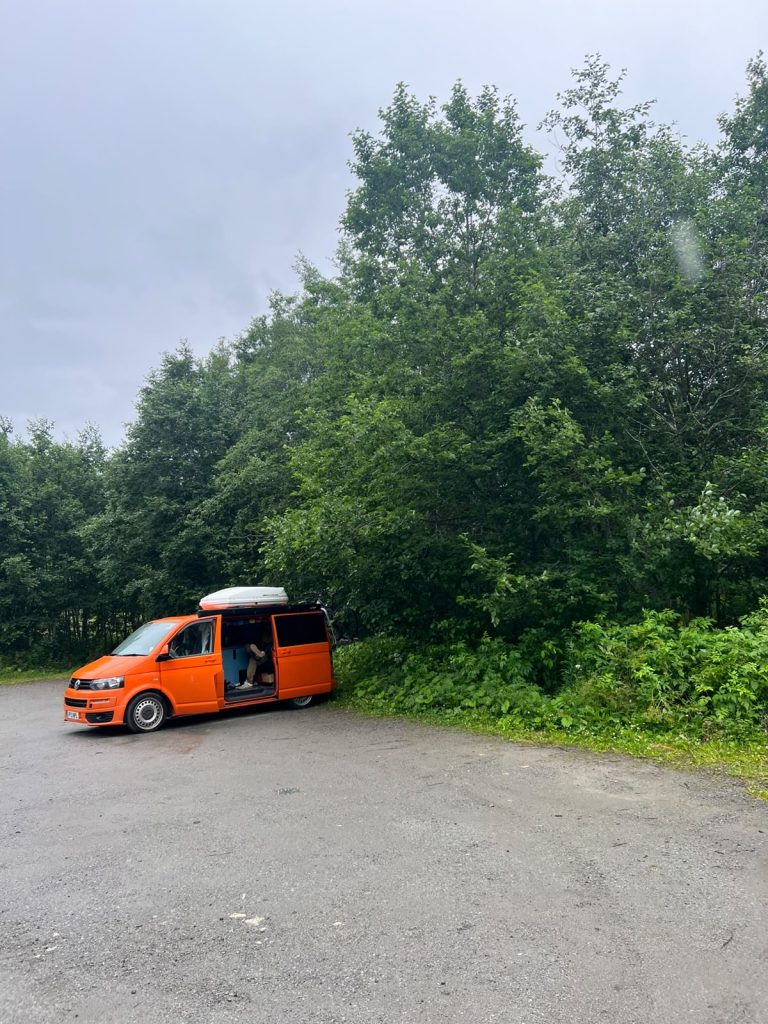
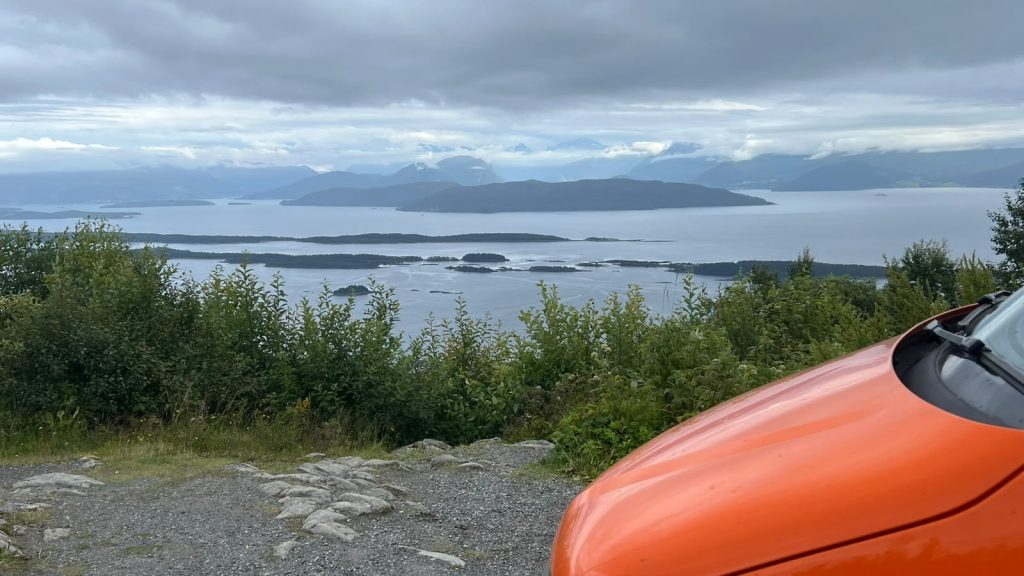
The best places for staying the night free of charge were carparks at beauty spots/nature areas, where there are sometimes toilet facilities and you can have amazing views. The most highly rated places on the apps can become busy in July and August, so try to arrive a little earlier to get a good space or be prepared to move on. We noticed that some of these places also have open sided shelters where there may be space to make a fire (note fires in summer months are not allowed outside of these special fire huts). There are usually (though not in places where there are only narrow roads directly next to fjords or steep cliffs) plenty of laybys which can be used for a stop for the night (if you have your own toilet facilities and follow good campervan etiquette). In terms of Norway's law you must never drive onto fields, beaches or forest, you should be 150m away from houses and respect local parking signs. Another option are carparks set up for motorhomes which charge (say £10-£15 a night) and provide facilities for grey and chemical waste water disposal.
When we visited towns and cities we tended to stay outside the town and travel in by bike or public transport and this was a good way to save money on parking (or potential parking fines if you haven’t been able to understand the parking rules).
In terms of places to visit, there are so many beautiful areas, and you might be able to avoid the crowds and save money by avoiding some of the most well-known spots. Try Senja instead of Lofoten for example. Travelling in June or September may mean avoiding the crowds and some campsites might be cheaper out of the high season (you should consider the possibility that some roads could be closed because of snow later in September).
If you are leaving your van and going hiking, every local area has it’s own day hut, it’s not for an overnight stay, but you can shelter and get cost there during the day. This reflects the Norwegian philosophy of friluftsliv (open air living, nature connection and creating a kind of cosy feeling being in the outdoors). There are also unattended huts run by the trekking association which you pay a small fee to stay overnight.
Driving costs
Unfortunately, you can’t currently get a ferry from the UK to Norway, so you’ll likely need to cross by ferry from Denmark or first to Sweden by ferry by the Øresund bridge from Copenhagen to Malmo (for which there is an expensive toll and will also involve crossing another toll bridge to cross between Denmark's islands). Ferry can be cheapest, but it will depend on the size of your vehicle. What I will say is that Denmark is probably the most expensive place we have travelled in the van, so if you are on a budget you might want to limit time spent there.
Fuel in Norway is currently a similar price to that in the UK as the Norwegian government has lowered taxes on it. Travel distances can be long though if you are driving in and out of the fjords. It took us about 3 weeks to drive from North to South at about 3 hours a day (with a few non-driving days). You may want to spend some time following a long winding road nearer the coast, but then elsewhere skip to a faster road further inland (which it can be said, will often also have stunning views). We spent around £400 on fuel (diesel) travelling in Norway for 3 weeks but we did include a lot of miles (Finland is really expensive for fuel so take that into account if you plan to go there). From observation, we think that fuel at the pump in Norway may be cheaper in the afternoon.
Seven years ago, we did a trip to Norway where we took one week to get there, spent a week there (just in the region south of Bergen) and then drove back in 4 days.
This year we saw only one other UK plate north of the Atlantic Ocean Road (I figure because it is not possible to drive there within the time of the usual holiday from work, and for people who are spending longer travelling in a van (such as ‘vanlifers’), they might have judged it too expensive compared to staying in some Southern European countries).
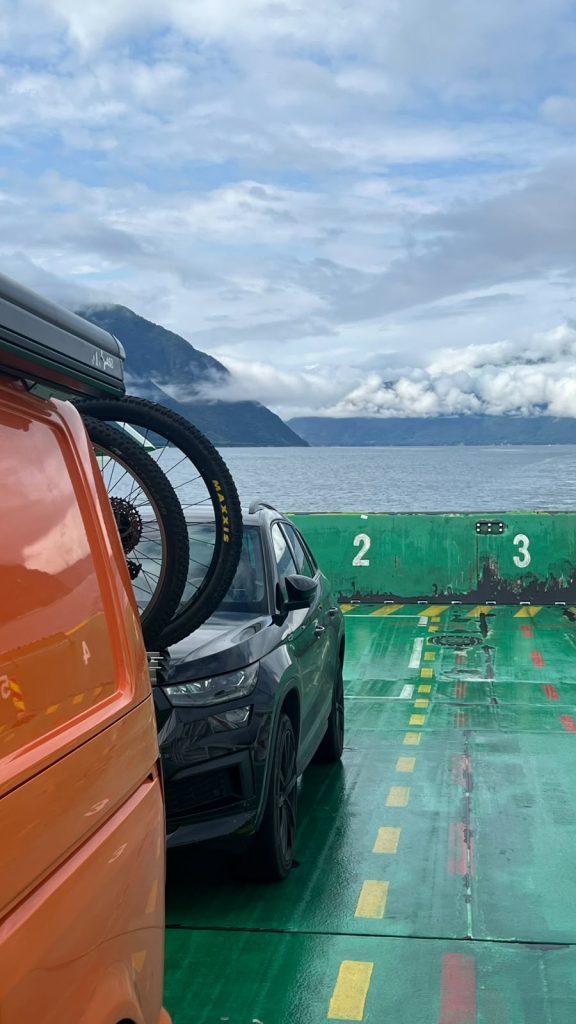
The other cost is ferries and road tolls – independently they are not expensive think £5-£15 a time (excluding longer ferries), but they do add up so should be factored into costs. There are many small ferries across fjords, you’ll be driving along and suddenly arrive at a ferry stop. You’ll usually not have long to wait before you drive onto a ferry, cross the fjord and continue your journey the other side. You can set up your card on an app (FerryPay) and link your numberplate so that you simply drive onto a ferry and you are automatically charged. Note: there are many ferries where foot passengers go free. There is a similar system with the road tolls. If you don’t register for that though, they’ll send you a bill in the post when you get back home. I will update this when I have a road toll total.
Money
Norway’s currency is the Norwegian Krone (NOK). We used a credit card for all our payments over the 3 weeks we spent there. In August 2026, one Krona is worth around 8 pence, so I calculated costs by multiplying the amount in NOK by 8 and taking off the last two digits (e.g. 100 NOK is a little less than £8). Make sure you have a credit card which gives a good rate of exchange and no foreign currency fees. Sweden and Denmark also have their own currencies, so it’s really best to use a card as otherwise you’d end up with lots of bits of different currencies.
Just do it!
When we've been travelling we have met an incredible array of travelers, from those in big expensive motorhomes to those who have simply left home with a bike and very little money for a few weeks. Young people can team together and get an airbnb, others pet sit, couch surf or exchange their house. There are many ways to have an adventure, meet people and explore new places.